BHO yields are all-important to hydrocarbon extraction professionals. Maximizing the amount of quality cannabis concentrate you can extract from your starting material is essential for maximizing your revenue—especially after investing in five or six-figure closed-loop extraction equipment.
Industry averages are a good starting point for assessing your current extraction efficiency. Considering the factors that influence yield and strategies for improving it will then help you get your BHO yield to where you want it to be.
Typical Yields from the BHO Extraction Process
Butane hash oil yields for a closed-loop system typically range between 10% and 30%, with lower yields (around 5%) for trim. You will also see yields expressed as “grams per ounce,” in which one ounce equals approximately 28 grams.
The following table indicates typical yields from different kinds of cannabis plant material using BHO extraction. We have provided approximate yields from both dry and wet (fresh frozen or live) starting material as live SKUs are the most typical use case nowadays (because they have a higher demand and fetch a higher price point in dispensaries).
| Starting Material | Typical Yield (from Dry) | Typical Yield (from Wet)* |
| Quality bud | 6-7g/oz | 1.5-1.75g/oz |
| Popcorn buds | Less than 6g/oz | Less than 1.5g/oz |
| Sugar leaves with airy buds | 3-4g/oz | 0.75-1g/oz |
| Trim | 1.5-2g/oz | 0.375-0.5g/oz |
*Dry yield figures decrease by approximately 75% when using fresh frozen starting material due to the water weight calculation.
Readers will notice that higher yields are obtained from starting material with more latent resin or trichome heads. This makes sense because it’s the trichome heads that contain most of the sticky cannabinoid-rich resin that becomes butane hash oil (BHO) after butane extraction and purging.
Solventless extractors will also notice that these BHO yield ranges are higher than the average dry sift yield and typical bubble hash yield. Solvent extraction is more efficient in percentage terms, which is one of the reasons why solvent extracts sell at a lower price point compared to their solventless counterparts.
The other main reason solventless costs more per gram is that you can only make solventless extracts with good inputs, whereas you can use solvent extraction with any quality of input. Being able to blast even poor and middle-quality plant material is helpful for BHO extractors because it allows them to make the most of failed or problem harvests.
The final reason solvent extracts are more economical than solventless extracts is that it is easier to diversify and standardize recipes with solvent extraction using the resulting THC-A as a baseline and adding the subsequent HTE (High Terpene Extract) as the flavor profile. This applies to live resin, which is BHO made from fresh frozen starting material, as well as BHO made from dry starting material.
Factors that Affect BHO Yield
There are several factors that affect BHO yield aside from the part of the plant that is used in the extraction process.
Strain and Genetics
Certain strains produce more trichomes than others. Strains that are good for solventless extraction are also great choices for BHO, although you can make great BHO with other strains. The BHO yield will naturally be higher when using a trichome-heavy strain.
Growing Conditions
The growing conditions of the plant also affect trichome production. Indoor vs outdoor cultivation, the growth medium chosen, and the plant training techniques used (if any) will affect the relative abundance and quality of trichomes on each plant.
The Timing of Harvest
Harvesting cannabis at peak maturity will render higher yields than harvesting the buds early when the trichomes haven’t had enough time to mature.
Post-Harvest Handling
Freezing cannabis buds immediately after harvesting them at peak ripeness will result in a more flavorful concentrate than performing a traditional dry and cure. Freezing your buds won’t necessarily boost the yield but can boost your revenue compared to drying the buds before extraction because it allows you to produce live extracts, which sell at a higher price point.
Biomass Reduction
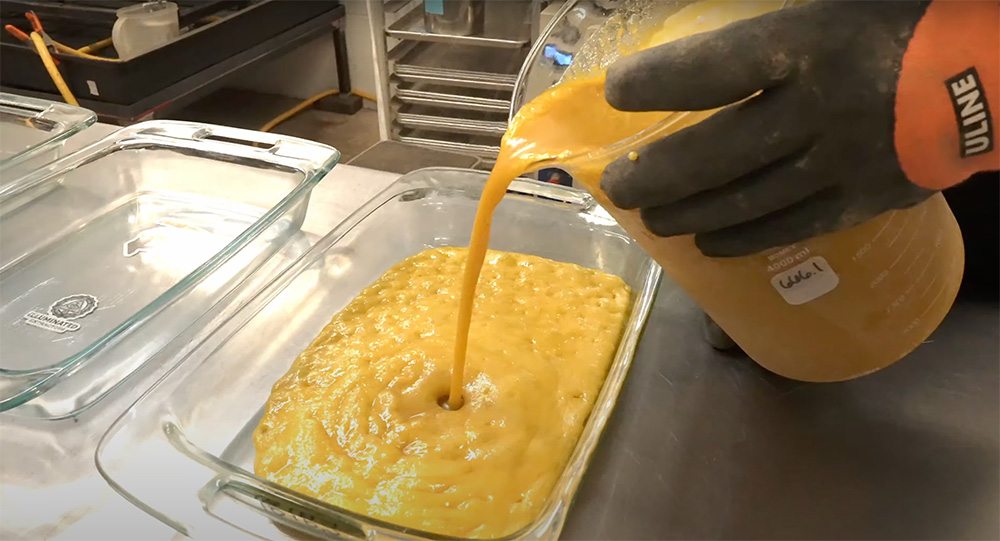
Performing biomass reduction using our patented Cryo-Sieve® process prior to BHO extraction significantly increases the ratio of trichomes to plant material for a more efficient extraction process. It’s the perfect partnership between solventless and solvent extraction—solventless extraction takes you halfway there and the solvent does the rest in a shorter amount of time.
-
-
- Biomass reduction using our Resinator XLS Pro and liquid nitrogen increases the overall extraction efficiency by up to 70%.
-
- Our experienced extractors have even achieved the same final yield using less than half the gas and less than half the time. This is a significant saving when added up over time.
-
- Biomass reduction results in a cleaner final product because less solvent is needed to complete the extraction. This means less post-processing is needed to remove the residual solvent. You can run a full vacuum purge in the vacuum chamber in [TIME] when you begin with pre-sieved biomass.
- Biomass reduction with Cryo-Sieve® optimizes live resin extraction because it maintains the cold chain.
-
Tip: You can perform biomass reduction for hydrocarbon extraction with a smaller volume of dry starting material using our Original Resinator OG. The XLS Pro with liquid nitrogen is a superior choice when working with fresh frozen or live material.
The Solvent Used
Butane is one of the best-yielding solvents, so BHO yields will already be higher than yields from ethanol extraction, for example. Extractors have also noticed differences in yield from different types of hydrocarbon solvents or blends. It might take some experimentation to see which brand or type gives you the best results.
Equipment, Extraction Techniques, and Experience
Using the right extraction equipment and techniques will help you optimize your yields from this extraction method. Temperature, pressure, and time parameters make a significant difference to both yields and quality. Experienced extractors will often produce higher yields and better results than novices using the same equipment.
Final Tip: Use “All the Animal”
You can maximize your extraction revenue from the same starting material (yield aside) by stratifying the material and using multiple extraction methods. For example:
-
-
- Run your live biomass through the Resinator XLS Pro for less than two minutes with a smaller micron screen (such as a 150µm screen). This will give you the premier trichome heads to be used for a solventless application like live rosin.
-
- Run the bulk of the material for live resin.
- Dry out the spec material (as it might have some trichomes left in it) and run it through ethanol for distillate.
-
This kind of stratified approach allows you to maximize your revenue from each “part of the animal” without requiring an inflated first or second-tier yield.
Boost Your BHO Yields and Revenue
BHO yields are influenced by a wide range of factors, including the trichome content of your starting material, pre-processing techniques like biomass reduction, the brand of butane used, and your experience and skill. You can also expect a much higher yield from trichome-heavy buds compared to low-trichome buds or trim.
Whatever other parameters you use, biomass reduction prior to BHO extraction is the best way to obtain excellent yields in the shortest time and with the smallest amount of butane. Refining your fresh frozen buds or trim with Cryo-Sieve® technology makes the extraction process far more efficient while conserving valuable terpenes for live BHO applications. Contact us to discuss your cannabis processing needs and to find out how our solutions save you money and lead to a superior end product.