


Freeze drying is revolutionizing the post-harvest workflow for cannabis growers and processors, but you need to know how to do it correctly to maintain product quality from live material to shelf. There are a few challenges and problems with freeze drying cannabis buds and extracts. More comprehensive specifications and instructions are provided in our Crop-to-Cure® SOP, which helps you fully dry and cure your plants in as little as 24-48 hours.
What Is Freeze Drying?
Freeze drying, also known as lyophilization, is a drying technique that removes moisture from a given substance through sublimation. Basically taking a solid (ice), to a vapor, without passing through the liquid phase. Think dry ice, which does not evaporate, but rather sublimates. In short, when sublimating under a vacuum, you get lyophilization.
This is highly useful for processing wet or fresh frozen cannabis into live dried, smokable cannabis buds and extracts, like ice water hash as well as live dry sift or kief. It’s quick, clean, effective, and doesn’t involve exposing live or fresh frozen biomass to unwanted water, heat, or large amounts of oxygen—the precise factors that cause cannabinoids and terpenes to oxidize, discolor, and degrade.
In the freeze-drying process:
- After pre-freezing the freeze dryer (in the same manner one would preheat an oven), the contents of the freeze-drying chamber are frozen solid. It is very important to make sure the product is frozen through to its core to avoid meltback and ensure a successful preservation process.
- Most of the frozen water is removed under a controlled vacuum without passing through the liquid stage (“sublimation”). This is the primary drying phase, which consists of multiple steps using varying temperatures and pressure.
- The remaining moisture is removed in a secondary drying phase. This process is referred to as adsorption. The product temperature will rise with the shelf temperature settings until complete.
How the Initial Freeze Rate Can Affect Product Quality
The initial product freeze rate plays a role in the speed of the freeze-drying process and the quality of the final product. The faster the freeze, the smaller the ice crystal. Slow freezing promotes larger ice crystals. Annealing or tempering is sometimes used to optimize the primary drying rate in pharmaceutical freeze drying due to the promotion of larger ice crystals, for example.
For freeze-drying cannabis buds, smaller ice crystals may be preferable as they help to preserve volatile compounds and shelf life. Conversely, for extracts like ice water hash (IWE), larger ice crystals might be more suitable, as they can help maintain product quality without causing excessive cell damage.
Ultimately, the best-case scenario depends on the specific goals and characteristics you want in the end product.
Other Applications of Freeze Drying
Outside of the cannabis industry, freeze-drying can be used for preserving food items like candy, meat, milk, and even pet products as well as materials like bacteria, yeast, blood plasma, and penicillin. While there are specific problems that can occur with freeze-dried food, we’ll focus here on common issues that can arise when using a freeze-dryer for cannabis-related applications.
Common Pitfalls to Avoid When Freeze-Drying Cannabis
Commercial industries—including the cannabis industry—the world over are turning to freeze drying for consistent, dependable, and scalable results that adhere to GMP guidelines when drying raw materials. While freeze-drying cannabis is becoming more common these days, there are several pitfalls you need to avoid to make sure you get great results every time.
1. Attempting to Dry Inconsistently Sized Buds
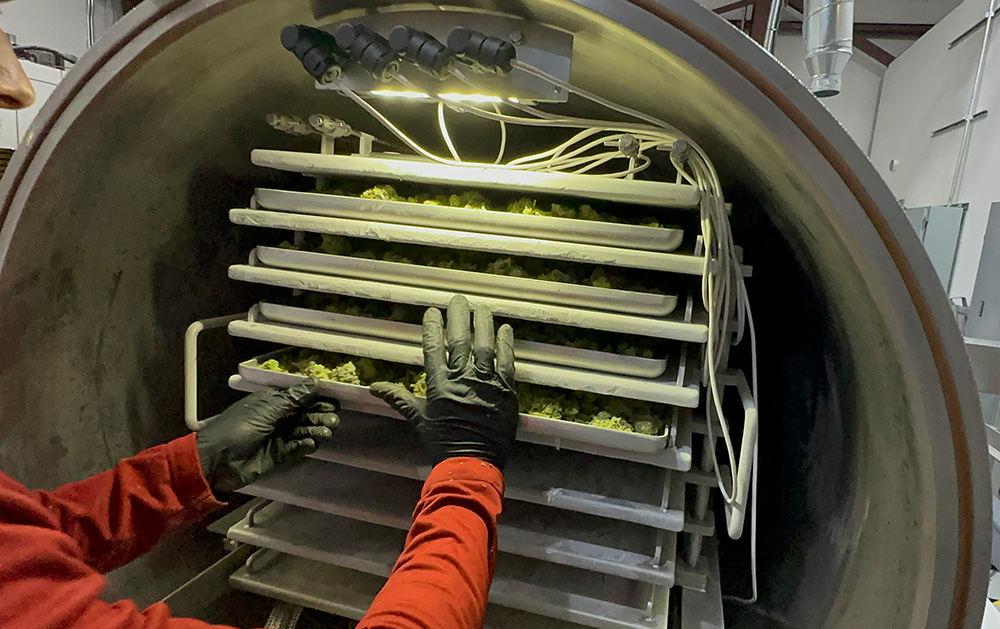
Freeze drying works best when the contents are evenly sized. It’s more of a uniformity approach. Of course, we still want to maintain the maximum size of premium-grown colas, while also experiencing the benefit of zero-shrinkage to our cannabis buds. After all, that’s what live dried is all about. But size does matter. If the buds are too large, they may not fit within the freeze dryers’ available tray space. And although freeze dryers can have custom shelves made to increase shelf spacing, doing so sacrifices expensive real estate in the freeze dryer, translating to fewer square feet of available tray space and smaller throughput capacity. So be sure to select the proper freeze dryer with adequate shelf spacing to accommodate your desired bud size if implementing the Crop-to-Cure® methodology.
For example, if you load the freeze dryer with popcorn buds mixed with a few very large buds, moisture may remain inside the larger buds even after the popcorn buds have dried, not only potentially over-drying the larger buds, but in an effort to compensate for an inconsistently sized product, you actually end up extending your total drying time. If too much moisture remains in the center of a larger bud, that could potentially lead to mold growth.
Therefore, the consistency of the product becomes a key consideration. The same process of thought goes with selecting the same strain for loading a batch. Like a dense indica plant taking longer to finish than a more airy structured sativa strain. The key takeaway here is to try to avoid mixing genetics in the same load while remaining consistent in size selection.
The other problem that can occur with differently sized pieces is that inconsistent drying can lead to uneven cannabinoid distribution. An unbalanced physical distribution of material can also result in variations in temperature and pressure within the freeze dryer, affecting the sublimation of water and the preservation of cannabinoids. The critical factor for uniform cannabinoid distribution in this case would be to ensure even freezing of the cannabis material before initiating the freeze-drying process. Any uneven freezing could potentially affect the distribution of cannabinoids during the subsequent freeze-drying steps. This could affect the product’s potency and quality.
These bud type and size considerations are particular to the freeze drying of cannabis buds and are not applicable to freeze drying bubble hash or ice water hash.
2. Overloading the Freeze Dryer
Overloading your freeze dryer can cause similar problems to freeze-drying a load of inconsistently sized buds. A heavy load will add several hours to your drying time and could lead to ineffective drying (and subsequent mold growth). On the other hand, underloading a freeze dryer’s available capacity can result in a much shorter run cycle. A consistent approach lends itself to a consistent result.
The best way to avoid this problem is to choose the right size freeze dryer for your needs. At The Original Resinator, we offer the following freeze dryers and sizes:
- Harvest Right Scientific Freeze Dryer (medium, large, and extra-large sizes). This freeze dryer can handle cannabis buds when combined with a DigiVac StrataVac Bleed Vacuum Controller and our Crop-to-Cure® SOP. The medium size can process around 1/2 lb of dry flower per cycle while the large size can process around 1 lb of dry flower per cycle and the XL comes in at around 2 lbs of dry flower per 24-hour cycle. The XL size is the best bang for your buck.
- CUDDON HL-50 (HiLyph Edition). This commercial freeze dryer can process 65 lbs of wet frozen flower or 16 dry lbs per 24 hours.
- CUDDON HL-600 (HiLyph Edition). This model can process 300 lbs of wet frozen flower or 75 dry lbs per 24 hours.
- CUDDON HL-1200 (HiLyph Edition). This model can process 600 lbs of wet frozen flower or 150 dry lbs per 24 hours.
- CUDDON HL-1800 (HiLyph Edition). This model can process 900 lbs of wet frozen flower or 225 dry lbs per 24 hours.
*The Harvest Right Pharmaceutical Freeze Dryer (which comes in medium, large, and extra-large sizes) is suitable for drying ice water hash and live dry sift but not whole cannabis buds.
Large commercial operators should generally opt for one of the larger freeze-dryer models. While this involves a significant upfront investment, the higher processing volume will prevent problems with overloading and allow you to get each crop to market in a fraction of the time compared to air drying.
3. Improper Temperature Control
The low temperatures used in the freeze-drying process are critical for preserving as many of the cannabinoids and terpenes as possible.
Improper temperature control when freeze-drying cannabis can manifest in various ways:
- Too High Temperatures: Excessive heat can lead to the degradation of cannabinoids and terpenes, compromising the quality of the final product.
- Uneven Freezing: Inconsistent or improper freezing temperatures may result in uneven ice crystal formation, leading to inconsistent cannabinoid distribution.
- Thermal Stress: Rapid temperature changes or fluctuation bursts can induce thermal stress, potentially causing structural damage to the cannabis material.
- Meltback: If temperatures are not properly controlled, previously frozen material may start to thaw (melt back) during the drying process, leading to rehydration and impacting the final product’s quality.
- Extended Drying Times: Inadequate temperature control can prolong the drying process, potentially affecting the efficiency and overall quality of the freeze-drying process.
To ensure proper temperature control, it’s essential to follow recommended protocols and guidelines, using equipment that allows precise regulation of temperature throughout the freeze-drying process.
Temperature control is crucial when freeze-drying cannabis for several reasons:
- Preservation of Compounds: Controlled low temperatures help preserve the delicate compounds in cannabis, such as cannabinoids and terpenes. Too high temperatures can lead to the degradation of these compounds, affecting the overall quality of the final product.
- Avoidance of Uneven Drying: Proper temperature control helps ensure even freezing and subsequent sublimation of water during the freeze-drying process. Uneven drying may lead to inconsistent cannabinoid distribution and compromise the quality of the final product.
- Prevention of Meltback: Maintaining the right temperature prevents thawing or “meltback” of previously frozen material during drying. This helps avoid localized rehydration, preserving the desired characteristics of the cannabis.
- Quality and Efficiency: Temperature control contributes to the overall quality and efficiency of the freeze-drying process. It helps achieve the desired product attributes and ensures a more reliable and reproducible outcome.
In summary, precise temperature control is essential to maintain the integrity of cannabis compounds and produce a high-quality, consistent end product during the freeze-drying process.
4. Inadequate Vacuum Levels
Inadequate vacuum levels may result in extended drying times, risking oxidation and degradation of cannabinoids and terpenes. The best way to ensure optimal vacuum levels is to use the DigiVac StrataVac Bleed Vacuum Controller together with your freeze dryer if you’re using a Harvest Right Scientific model. For the Cuddon HiLyph models (the industry standard commercial option), this add-on is not necessary.
Vacuum pressure plays a crucial role in freeze-drying cannabis for several reasons:
- Sublimation of Water: The primary goal of freeze-drying is to remove water from the cannabis material through sublimation, where frozen water transitions directly from a solid to a vapor without passing through the liquid phase. A vacuum lowers the pressure, facilitating this sublimation process at lower temperatures.
- Preventing Meltback: Adequate vacuum pressure helps prevent meltback, where previously frozen material starts to thaw during the drying process. Lowering the pressure reduces the temperature at which water transitions to vapor, minimizing the risk of rehydration.
- Efficiency and Speed: The use of vacuum pressure accelerates the sublimation of water, making the freeze-drying process faster and more efficient. This is particularly important for preserving the quality of cannabis by minimizing exposure to elevated temperatures.
- Maintaining Product Quality: Controlled vacuum pressure contributes to maintaining the structural integrity and preserving the desirable characteristics of the cannabis, including cannabinoids and terpenes, by avoiding excessive heat and minimizing processing times.
- Preservation of Terpenes: Terpenes are a class of volatile organic compounds that are often present in botanical samples, such as cannabis or herbs. When these samples are freeze-dried at low vacuum pressures, the low-pressure environment can cause the terpenes to sublimate along with the water. This can result in a loss of terpenes and a decrease in the overall quality of the sample. In order to preserve terpenes during freeze drying, it is important to use a vacuum pressure that is high enough to remove the water, but not so low that it causes the terpenes to volatilize. This can be achieved through careful control of the vacuum pressure during the freeze-drying process.
In summary, vacuum pressure is crucial in freeze-drying cannabis as it enables efficient water removal through sublimation at lower temperatures, all while preserving cannabinoids as well as terpenes, preventing meltback, and contributing to the overall quality and efficiency of the process.
These precision vacuum controls come standard in commercial equipment solutions such as the Cuddon HiLyph Edition by The Original Resinator.
5. Not Using Liners (with Ice Water Hash)
Freeze dryer tray liners (non-stick, food-grade parchment papers) are essential when freeze-drying ice water hash and useful (but not essential) for flower. Using parchment paper to line the trays offers two key advantages:
- They make it easier to clean the trays. The food-grade stainless-steel trays that are used in freeze drying are already easy to clean. However, using parchment paper prevents trichomes from collecting on the trays and allows for a rapid turnover.
- Parchment paper prevents odors from transferring to the tray and then to the next batch of raw material. This mainly occurs in Harvest Right units where odors get absorbed into the orange rubber heat meats (depending on what you’re drying).
You can technically reuse parchment paper for future batches of raw material as long as it’s clean. However, commercial producers generally replace the parchment paper for each batch of ice water hash to be safe.
6. Potential Microbial Contamination
Freeze drying comes with the advantage of a lower chance of contamination compared to air drying your cannabis products—especially if you only process cannabis and don’t freeze-dry it with a potential source of cross-contamination such as raw meat. While freeze drying doesn’t eliminate mold, mildew, and pests, it stops their growth in their tracks (standard drying and curing techniques do not).
The main times that contamination can occur are when you put your buds or extracts into the freeze dryer, when you take them out, and when you store the freeze-dried products afterward. Microbial growth can also occur if the buds or extracts aren’t dried evenly and thoroughly.
To prevent microbial contamination:
- Station your freeze dryer close to your freezer and/or cannabis processing equipment (your Original Resinator) so that you don’t have to carry the contents or trays over long distances. Or as we like to say, maintain the cold chain.
- Monitor the freeze-drying process carefully to ensure that the buds or extracts are dried thoroughly after each cycle. If you are using our SOP, you shouldn’t have to monitor the buds too much during the freeze-drying process. However, you do need to dial in your process and check things afterward.
- Cure the buds in a clean, temperature-controlled environment after drying. We generally cure freeze-dried buds with 24 hours of burping. When the freeze-dried cannabis comes out of the freeze dryer, it begins to absorb moisture from the air in its localized environment, along with being in an oxygen-rich atmosphere. These two things, plus enzymes that are still 100 percent potent will cause the degradation of the chlorophyll in the first few hours depending on humidity. Allowing it to breathe overnight with occasional burping over the initial day or two out of the freeze dryer leaves you with a product that is dried & cured as if it was hanging for 10-20 days.
- Have your freeze-dried buds or extracts lab-tested for safety before packaging and distribution.
7. Potential Flavor Contamination
Drying raw materials with very different flavors together can lead to one material absorbing the flavor of another. While this tends to be a bigger issue with freeze-dried foods (drying onion and ice cream together, for example), it’s still a good precaution to dry a single strain or extract in each cycle rather than mix and match.
This is another reason why it’s essential to choose the right size freeze dryer for your operation: You are more likely to mix strains and extracts in a single run if your freeze dryer is larger than you need.
8. Not Cleaning Your Freeze Dryer
Freeze dryers need to be cleaned after each use just like any other machine. Failing to do this could eventually lead to clogs or malfunctions. You can use a fogging solution such as that offered by Gard’nClean.
9. Not Caring for the Oil in the Vacuum Pump (If Required)
Freeze dryers that come with a standard pump will need regular oil changes to keep the pump running smoothly. We bundle the Harvest Right Oil-Free Scroll Vacuum Pump with the standard Scientific model. We also include an oil-free pump standard with the Cuddon HiLyph units and in our Turnkey Crop-to-Cure® Live Dried Equipment Bundle to save you time and money on oil changes.
10. Running the Freeze Dryer in a Space Without Temperature Control
Freeze dryers can be used at room temperature but extreme temperatures can cause issues with the machine. A very high ambient temperature will mean your freeze dryer has to work harder and potentially extend your drying time by several hours. Conversely, the compressor could get frozen if you leave the freeze dryer in a garage during an especially cold winter.
Additional Challenges With Freeze Drying
We’ve covered several of the main pitfalls when using a freeze-dryer to process cannabis buds and extracts. However, there are a few additional things to be aware of before you invest in one of these pieces of equipment.
Initial Investment
Freeze dryers represent a significant upfront investment. Pharmaceutical units capable of drying ice water hash and live kief or sift can start at around 5k. To get your foot in the door with a scientific model freeze dryer, equipped with programmability—which is essential if you’re looking to freeze dry cannabis buds, you’re looking at around 10-15k, and up to millions for the largest capacity commercial units.
However, it’s important to keep in mind that an air drying room isn’t free, either. For commercial-quality results, you can’t just put your weed in a closet or a room. Good drying rooms need environmental controls even if you’re going the traditional dry and cure route. Either way, you’re going to need to invest money at the outset, but you can get started with freeze-drying as a proof of concept for an affordable amount, and expand to larger commercial units as your company scales.
Requires Training
You can’t just throw buds in a Harvest Right and expect perfect results. Special vacuum controls and settings are key. We offer all of this in turnkey packages to make it super duper easy. We also offer training, education, and consulting to help you optimize your current processes through our sister company, Industry Processing Solutions.
Produces a Slightly Different Product
Freeze-dried cannabis has a different texture to air dried and not all consumers are used to this yet. There are, however, numerous benefits:
- Freeze-dried cannabis buds have a great taste and smell.
- They preserve more cannabinoids and terpenes than their air dried counterparts (check out our white paper on drying cannabis with lyophilization for more on the benefits of live dried).
- They are more potent and of higher quality, allowing for a higher retail price point and increased revenue.
- They provide an enhanced user experience with cannabinoid profiles that are more energetic (as opposed to lethargy-inducing), smoother to inhale with minimized tussiculation, and more flavorful with a fresh floral essence.
 A Good Freeze Dryer Is Worth Every Cent
Incorporating a freeze dryer into your workflow involves setup and process changes and a larger upfront investment compared to doing a basic traditional dry and cure. You also need to get the settings right for dependable results. A Cudden HiLyph freeze dryer combined with our SOP is ideal.
Commercial industries that have to dry their products rely on freeze-drying the world over for consistent, high-quality results. This is just the natural evolution of cannabis maturing as an industry. The challenges and investment associated with freeze drying are 100% worth the squeeze!